Tuesday, September 28, 2010

Co-sleeping? Check out this article

Cosleeping and Biological Imperatives: Why Human Babies Do Not and Should Not Sleep Alone

Posted by dlende on December 21, 2008

mother-and-childBy James J. McKenna Ph.D.
Edmund P. Joyce C.S.C. Chair in Anthropology
Director, Mother-Baby Behavioral Sleep Laboratory
University of Notre Dame

Where a baby sleeps is not as simple as current medical discourse and recommendations against cosleeping in some western societies want it to be. And there is good reason why. I write here to explain why the pediatric recommendations on forms of cosleeping such as bedsharing will and should remain mixed. I will also address why the majority of new parents practice intermittent bedsharing despite governmental and medical warnings against it.

Definitions are important here. The term cosleeping refers to any situation in which a committed adult caregiver, usually the mother, sleeps within close enough proximity to her infant so that each, the mother and infant, can respond to each other’s sensory signals and cues. Room sharing is a form of cosleeping, always considered safe and always considered protective. But it is not the room itself that it is protective. It is what goes on between the mother (or father) and the infant that is. Medical authorities seem to forget this fact. This form of cosleeping is not controversial and is recommended by all.

Unfortunately, the terms cosleeping, bedsharing and a well-known dangerous form of cosleeping, couch or sofa cosleeping, are mostly used interchangeably by medical authorities, even though these terms need to be kept separate. It is absolutely wrong to say, for example, that “cosleeping is dangerous” when roomsharing is a form of cosleeping and this form of cosleeping (as at least three epidemiological studies show) reduce an infant’s chances of dying by one half.

Bedsharing is another form of cosleeping which can be made either safe or unsafe, but it is not intrinsically one nor the other. Couch or sofa cosleeping is, however, intrinsically dangerous as babies can and do all too easily get pushed against the back of the couch by the adult, or flipped face down in the pillows, to suffocate.

Often news stories talk about “another baby dying while cosleeping” but they fail to distinguish between what type of cosleeping was involved and, worse, what specific dangerous factor might have actually been responsible for the baby dying. A specific example is whether the infant was sleeping prone next to their parent, which is an independent risk factor for death regardless of where the infant was sleeping. Such reports inappropriately suggest that all types of cosleeping are the same, dangerous, and all the practices around cosleeping carry the same high risks, and that no cosleeping environment can be made safe.

Nothing can be further from the truth. This is akin to suggesting that because some parents drive drunk with their infants in their cars, unstrapped into car seats, and because some of these babies die in car accidents that nobody can drive with babies in their cars because obviously car transportation for infants is fatal. You see the point.

One of the most important reasons why bedsharing occurs, and the reason why simple declarations against it will not eradicate it, is because sleeping next to one’s baby is biologically appropriate, unlike placing infants prone to sleep or putting an infant in a room to sleep by itself. This is particularly so when bedsharing is associated with breast feeding.

When done safely, mother-infant cosleeping saves infants lives and contributes to infant and maternal health and well being. Merely having an infant sleeping in a room with a committed adult caregiver (cosleeping) reduces the chances of an infant dying from SIDS or from an accident by one half!

Research

In Japan where co-sleeping and breastfeeding (in the absence of maternal smoking) is the cultural norm, rates of the sudden infant death syndrome are the lowest in the world. For breastfeeding mothers, bedsharing makes breastfeeding much easier to manage and practically doubles the amount of breastfeeding sessions while permitting both mothers and infants to spend more time asleep. The increased exposure to mother’s antibodies which comes with more frequent nighttime breastfeeding can potentially, per any given infant, reduce infant illness. And because co-sleeping in the form of bedsharing makes breastfeeding easier for mothers, it encourages them to breastfeed for a greater number of months, according to Dr. Helen Ball’s studies at the University of Durham, therein potentially reducing the mothers chances of breast cancer. Indeed, the benefits of cosleeping helps explain why simply telling parents never to sleep with baby is like suggesting that nobody should eat fats and sugars since excessive fats and sugars lead to obesity and/or death from heart disease, diabetes or cancer. Obviously, there’s a whole lot more to the story.

As regards bedsharing, an expanded version of its function and effects on the infant’s biology helps us to understand not only why the bedsharing debate refuses to go away, but why the overwhelming majority of parents in the United States (over 50% according to the most recent national survey) now sleep in bed for part or all of the night with their babies.

That the highest rates of bedsharing worldwide occur alongside the lowest rates of infant mortality, including Sudden Infant Death Syndrome (SIDS) rates, is a point worth returning to. It is an important beginning point for understanding the complexities involved in explaining why outcomes related to bedsharing (recall, one of many types of cosleeping) vary between being protective for some populations and dangerous for others. It suggests that whether or not babies should bedshare and what the outcome will be may depend on who is involved, under what condition it occurs, how it is practiced, and the quality of the relationship brought to the bed to share. This is not the answer some medical authorities are looking for, but it certainly resonates with parents, and it is substantiated by scores of studies.

Understanding Recommendations

Recently, the American Academy of Pediatrics (AAP) SIDS Sub-Committee for whom I served (ad hoc) as an expert panel member recommended that babies should sleep close to their mothers in the same room but not in the same bed. While I celebrated this historic roomsharing recommendation, I disagreed with and worry about the ramifications of the unqualified recommendation against any and all bedsharing. Further, I worry about the message being given unfairly (if not immorally) to mothers; that is, no matter who you are, or what you do, your sleeping body is no more than an inert potential lethal weapon against which neither you nor your infant has any control. If this were true, none of us humans would be here today to have this discussion because the only reason why we survived is because our ancestral mothers slept alongside us and breastfed us through the night!
mckenna-sleeping-with-your-babyI am not alone in thinking this way. The Academy of Breast Feeding Medicine, the USA Breast Feeding Committee, the Breast Feeding section of the American Academy of Pediatrics, La Leche League International, UNICEF and WHO are all prestigious organizations who support bedsharing and which use the best and latest scientific information on what makes mothers and babies safe and healthy. Clearly, there is no scientific consensus.

What we do agree on, however, is what specific “factors” increase the chances of SIDS in a bedsharing environment, and what kinds of circumstances increase the chances of suffocation either from someone in the bed or from the bed furniture itself. For example, adults should not bedshare if inebriated or if desensitized by drugs, or overly exhausted, and other toddlers or children should never be in a bed with an infant. Moreover, since having smoked during a pregnancy diminishes the capacities of infants to arouse to protect their breathing, smoking mothers should have their infants sleep alongside them on a different surface but not in the same bed.

My own physiological studies suggest that breastfeeding mother-infant pairs exhibit increased sensitivities and responses to each other while sleeping, and those sensitivities offers the infant protection from overlay. However, if bottle feeding, infants should lie alongside the mother in a crib or bassinet, but not in the same bed. Prone or stomach sleeping especially on soft mattresses is always dangerous for infants and so is covering their heads with blankets, or laying them near or on top of pillows. Light blanketing is always best as is attention to any spaces or gaps in bed furniture which needs to be fixed as babies can slip into these spaces and quickly to become wedged and asphyxiate. My recommendation is, if routinely bedsharing, to strip the bed apart from its frame, pulling the mattress and box springs to the center of the room, therein avoiding dangerous spaces or gaps into which babies can slip to be injured or die.

But, again, disagreement remains over how best to use this information. Certain medical groups, including some members of the American Academy of Pediatrics (though not necessarily the majority), argue that bedsharing should be eliminated altogether. Others, myself included, prefer to support the practice when it can be done safely amongst breastfeeding mothers. Some professionals believe that it can never be made safe but there is no evidence that this is true.

More importantly, parents just don’t believe it! Making sure that parents are in a position to make informed choices therein reflecting their own infant’s needs, family goals, and nurturing and infant care preferences seems to me to be fundamental.

Our Biological Imperatives

My support of bedsharing when practiced safely stems from my research knowledge of how and why it occurs, what it means to mothers, and how it functions biologically. Like human taste buds which reward us for eating what’s overwhelmingly critical for survival i.e. fats and sugars, a consideration of human infant and parental biology and psychology reveal the existence of powerful physiological and social factors that promote maternal motivations to cosleep and explain parental needs to touch and sleep close to baby.

The low calorie composition of human breast milk (exquisitely adjusted for the human infants’ undeveloped gut) requires frequent nighttime feeds, and, hence, helps explain how and why a cultural shift toward increased cosleeping behavior is underway. Approximately 73% of US mothers leave the hospital breast feeding and even amongst mothers who never intended to bedshare soon discover how much easier breast feeding is and how much more satisfied they feel with baby sleeping alongside often in their bed.

But it’s not just breastfeeding that promotes bedsharing. Infants usually have something to say about it too! And for some reason they remain unimpressed with declarations as to how dangerous sleeping next to mother can be. Instead, irrepressible (ancient) neurologically-based infant responses to maternal smells, movements and touch altogether reduce infant crying while positively regulating infant breathing, body temperature, absorption of calories, stress hormone levels, immune status, and oxygenation. In short, and as mentioned above, cosleeping (whether on the same surface or not) facilitates positive clinical changes including more infant sleep and seems to make, well, babies happy. In other words, unless practiced dangerously, sleeping next to mother is good for infants. The reason why it occurs is because… it is supposed to.

Recall that despite dramatic cultural and technological changes in the industrialized west, human infants are still born the most neurologically immature primate of all, with only 25% of their brain volume. This represents a uniquely human characteristic that could only develop biologically (indeed, is only possible) alongside mother’s continuous contact and proximity—as mothers body proves still to be the only environment to which the infant is truly adapted, for which even modern western technology has yet to produce a substitute.

Even here in whatever-city-USA, nothing a baby can or cannot do makes sense except in light of the mother’s body, a biological reality apparently dismissed by those that argue against any and all bedsharing and what they call cosleeping, but which likely explains why most crib-using parents at some point feel the need to bring their babies to bed with them —findings that our mother-baby sleep laboratory here at Notre Dame has helped document scientifically. Given a choice, it seems human babies strongly prefer their mother’s body to solitary contact with inert cotton-lined mattresses. In turn, mothers seem to notice and succumb to their infant’s preferences.

There is no doubt that bedsharing should be avoided in particular circumstances and can be practiced dangerously. While each single bedsharing death is tragic, such deaths are no more indictments about any and all bedsharing than are the three hundred thousand plus deaths or more of babies in cribs an indictment that crib sleeping is deadly and should be eliminated. Just as unsafe cribs and unsafe ways to use cribs can be eliminated so, too, can parents be educated to minimize bedsharing risks.

Moving Beyond Judgments to Understanding

We still do not know what causes SIDS. But fortunately the primary factors that increase risk are now widely known i.e. placing an infant prone (face down) for sleep, using soft mattresses, maternal smoking, overwrapping babies or blocking air movement around their faces. In combination with bedsharing, where more vital normal defensive infant responses and may be more important to an infant (like the ability to arouse to bat a blanket which momentarily falls to cover the infants face when its parent moves or turns) these risks become exaggerated especially amongst unhealthy infants. When infants die in these obviously unsafe conditions, it is here where social biases and the sheer levels of ignorance associated with actually explaining the death become apparent. A death itself in a bedsharing environment does not automatically suggest, as many legal and medical authorities assert, that it was the bedsharing, or worse, suffocation that killed the infant. Infants in bedsharirng environments, like babies in cribs, can still die of SIDS.

It is a shame and certainly inappropriate that, for example, the head pathologists of the state of Indiana recommends that other pathologists assume SIDS as a likely cause of death when babies die in cribs but to assume asphyxiation if a baby dies in an adult bed or has a history of “cosleeping”. By assuming before any facts are known from the pathologist’s death scene and toxicological report that any bedsharing baby was a victim of an accidental suffocation rather than from some congenital or natural cause, including SIDS unrelated to bedsharing, medical authorities not only commit a form of scientific fraud but they victimize the doomed infant’s parents for a third time. The first occurs when their baby dies, the second occurs when health professionals interviewed for news stories (which commonly occurs) imply that when a baby dies in a bed with an adult it must be due to suffocation (or a SIDS induced by bedsharing). The third time the parents are victimized is when still without any evidence medical or police authorities suggest that their baby’s death was “preventable,” that their baby would still be alive if only the parents had not bedshared. This conclusion is based not on the facts of the tragedy but on unfair and fallacious stereotypes about bedsharing.

Indeed, no legitimate SIDS researcher nor forensic pathologist should render a judgment that a baby was suffocated without an extensive toxiological report and death scene investigation including information from the mother concerning what her thoughts are on what might or could have happened.

Whether involving cribs or adult beds, risky sleep practices leading to infant deaths are more likely to occur when parents lack access to safety information, or if they are judged to be irresponsible should they choose to follow their own and their infants’ biological predilections to bedshare, or if public health messages are held back on brochures and replaced by simplistic and inappropriate warnings saying “just never do it.” Such recommendations misrepresent the true function and biological significance of the behaviors, and the critical extent to which dangerous practices can be modified, and they dismiss the valid reasons why people engage in the behavior in the first place.

For More Information:
A Popular Parenting Book
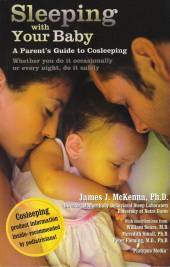
Sleeping With Your Baby: A Parent’s Guide To Cosleeping by James J.McKenna (2007). Platypus Press.

The Scientific Perspective
McKenna, J., Ball H., Gettler L., Mother-infant Cosleeping, Breastfeeding and SIDS: What Biological Anthropologists Have Learned About Normal Infant Sleep and Pediatric Sleep Medicine. Yearbook of Physical Anthropology 50:133-161 (2007)

McKenna, J., McDade, T., Why Babies Should Never Sleep Alone: A Review of the Co-Sleeping Controversy in Relation to SIDS, Bedsharing and Breastfeeding (pdf). Paediatric Respiratory Reviews 6:134-152 (2005)

Tuesday, May 18, 2010

Motherhood and the $13 Billion Guilt

Since this month's publication of my paper "The Burden of Suboptimal Breastfeeding in the United States" in Pediatrics with Arnold Reinhold, I'm often asked by reporters what the US can do better to improve our breastfeeding rates. I've also gotten quite a few comments asking if this research just makes moms feel guilty if they couldn't breastfeed.

The answers to both these queries are intimately related, and are best illustrated by the following Tale of Two Births. As you will see, if you compare what should happen when a woman gives birth, versus what actually happens, you can appreciate how tough it can be for US women to breastfeed, but how much easier it could be if only things were a little different around here.

Birth number 1: Having a baby in the ideal, family-friendly United States:

You give birth with the help of a birth doula. She helps you avoid a c-section or vacuum assisted birth, which is why your hospital hired her. Your baby is wiped off, then put directly onto your chest, skin to skin, with his head between your breasts. The nurse puts a blanket around you both, and then your partner cuts the cord. The nurse evaluates his initial transition to life outside the womb as he rests on your chest. As you lay semi-reclining, happy and exhausted, your baby uses his arms and legs to crawl over to your breast and he starts nursing. You and your partner are left undisturbed for an hour to enjoy your new baby, who has now imprinted the proper breastfeeding behaviors thanks to this initial breastfeeding. You are then transported to your post-partum room with your baby on your chest.

The nurse returns and weighs, measures, and examines your baby right there in your room. You are with him as she gives him his vitamin K shot and antibiotic eye ointment. Your baby is handed back to you, and again placed on your chest skin to skin. He stays in your room with you until you go home. From your prenatal class, you knew in advance to ask most of your visitors wait until you go home, so that you can get some rest, and you turn the ringer off your phone, so that no phone calls will wake you. Before you leave the hospital, your baby's routine heel-stick blood test is done while he is nursing, and you are amazed to see he doesn't cry at all. You are discharged with clear instructions around breastfeeding, and phone numbers to call if you need help. You are not given samples and "gifts" from a formula company.

Two days later, you see your pediatrician, who is a little concerned about the baby's weight, but your baby otherwise looks healthy. He quickly refers you to a licensed International Board Certified Lactation Consultant, and all you pay is your standard co-pay. She does a careful assessment and advises increasing the frequency of nursing for a few days, and that does the trick.

You enjoy three months paid maternity leave, at 80% of your usual pay. Your baby sleeps within arm's reach of you, and because you taught yourself how to breastfeed lying down in the dark, you awake fairly refreshed every morning.

When you return to work, your employer allows you flex time. Your employer has a policy that allows new parents to bring their infants to work, so often you bring your baby with you. As in other companies with such policies, your coworkers enjoy having a baby around, and you feel happy, calm, and productive.

When your baby gets more active, you put him in the daycare near your worksite so you can nurse him during lunch, and you can pump milk in the lactation room at work. You bought a nice pump with your insurance's Durable Medical Equipment allowance. After 6 months, you introduce solids. A few months later, you really don't need to pump any more and you and your baby enjoy breastfeeding for another year. Your baby is so healthy that you've never had to miss a full day of work.

Does that sound like your birth experience, or does this?

Birth number 2: Having a baby in the real United States:

Your give birth to a healthy baby, and you've never heard of a birth doula. The umbilical cord is clamped and cut before anyone can say, "It's a boy!" Immediately, your baby is whisked across the room to the warmer where Apgar scores are assigned, he's given a shot of Vitamin K, and antibiotic eye ointment is slathered in his eyes, clouding his vision. He's placed on a cold scale and weighed and measured. He is examined by his nurse, who takes him to a different room to do her evaluation. He is bathed, washing off his mother's scent. At last, he's professionally swaddled into a nice tight parcel and handed to you to hold, cradled sideways in your arms.

He's not skin to skin, and he can't move his arms and legs to crawl to the breast. Before you know it, an hour has passed since his birth, and since he's missed the window of "alert time" after birth, he slips into a deep sleep without having spontaneously breastfeed. You attempt to interest him in the breast, but he is really too tired to try very hard. Because he's wrapped up and has been given a bath, he can't use his sense of touch and smell to crawl his way over to find your breast. You don't know enough to unwrap him and feed him immediately after birth, because your prenatal class didn't stress the importance of skin to skin contact during the first 3 days of life. That was all discussed in a separate breastfeeding class and you didn't really have time or money to take two classes.

Just as you're getting to know your new bundle of joy, the staff decides to check his temperature and his blood sugar. His glucose level is 45 -- normal for a newborn, but low for an adult. His temperature is a little low, too -- all that time in the bath, the cold scale, the swaddling, and the time away from his mom's body heat has led to hypothermia.

Hypothermia and hypoglycemia can be signs of a serious infection, so immediately he is taken from your arms down to the nursery, where he gets what's known as a sepsis evaluation. Lying under a warmer down the hall from you, he gets his blood drawn, and then is left in his bassinet in the nursery to be observed for a few hours so you can't spend time with him as you recover from giving birth. He gets a 2 ounce bottle of formula, most of which he vomits, since the stomach of a five-hour-old baby is no bigger than a teaspoon, the perfect size to digest the colostrum your breast secretes for him in the first few days.

Finally, your baby's brought back to you, swaddled in a nice package. He's more alert, but never imprinted breastfeeding very well, and he's very stressed from all the day's events. He might be full from the formula he's given, and doesn't breastfeed well. He tries later in the day. The nurses try to help you, but it feels like they all give you different advice, much of it conflicting. Little do you know, their advice is based on their personal experiences rather than any scientific evidence because they haven't had much training in breastfeeding. You don't know what to believe. Finally, your baby goes to the nursery for the night "so you can sleep," and he is brought in for you to feed him. He doesn't like it in the nursery, so he cries, and you don't get much sleep either.

You have some pain when he latches on, and you're told that's normal. You're so excited about his birth that you talk to everyone by phone, and lots of people come to visit. They pass him around. Maybe someone wants to give him a bottle, and you figure, ok, why not. He's chewing on his fist, but no one ever told you that means he's hungry, so you give him a hospital-issued pacifier to suck on instead of his hand. You don't know that giving formula and pacifiers in the hospital will undermine your efforts to breastfeed. It's surprising the nursing staff doesn't inform you of this, and you didn't learn it in your prenatal class. You're too embarrassed to feed him with everyone there. Finally, your guests leave, but by this time, your baby's frantic, and nursing doesn't go well as a result.

Overnight, as he stays in the nursery, he gets weighed, and he's lost more weight than he should have. The doctor says it's because your milk isn't in yet, and recommends more bottles. He still sucks happily on a pacifier and sleeps in the nursery despite his alarming weight loss, and no one suggests that you nurse him more often, room in with him, get rid of the pacifier, or see a lactation consultant, all of which would help put him back on track with breastfeeding.

An hour before you're due to go home, the lactation consultant comes in briefly to check on you, but because her department is so understaffed, she couldn't see you earlier when you needed it most, and she has little time to spend addressing your problems. On your way out, a nurse hands you a marketing bag from a brand-name formula company, complete with free samples of formula and information on breastfeeding that makes it sound a little hard and scary. She tells you if you have any questions, to just call your pediatrician.

The first night at home, things don't go well. It's the middle of the night, and your baby won't stop crying when you try to breastfeed. You wonder if you should just give up. You reach for that ready-made bottle and his crying mercifully stops. The problem is solved, at least for now.

You are really motivated to breastfeed, so in the morning, you try to find a lactation consultant. You talk to someone you find in the yellow pages called a "lactation counselor" who is willing to help, but your insurance won't pay. You find someone else called a "lactation consultant." You have no idea what the difference is between a "lactation counselor" and a "lactation consultant." Since these professionals aren't licensed in any state, you have no way of knowing if they know what they are doing.

You meet with the lactation consultant, but have to pay out of pocket. She helps you. Afterwards, you have to file a claim with your insurance company and hope they reimburse you, all while caring for your newborn. The lactation consultant recommends pumping with a double electric pump to help you build up your milk supply, which is now threatened because of all the formula the baby got, and because his breastfeeding technique is not really good enough yet to extract milk well, since he didn't learn properly right from the beginning. Your insurance won't allow the breast pump to come out of your Durable Medical Equipment allowance, and you try to pay for it with your Flexible Spending benefit card, but it's denied. You pay $250 out of pocket. Good thing you had a gift card to pay for all that!

You go to your pediatrician for follow up. Since your pediatrician got very little training on breastfeeding, he doesn't know how to help you, but is concerned that your baby has lost too much weight, and advises giving some formula. You don't know what to do because the lactation consultant's advice was different.

Ugh!!! This is really hard, you think. Eventually, things miraculously end up working out, just because you persevere through thick and thin, and your partner and family and friends are very supportive. By about 4 weeks, your baby is now exclusively breastfeeding, and gaining well. And you are enjoying what time is left of your unpaid leave under the Family Medical Leave Act. But, you have only two more weeks before you go back to work. You can't afford any more time off.

You start pumping to build up a stash of frozen milk for your return to work. You arrange with your employer a place to pump -- how lucky you are that it won't be a bathroom! You go back to work, and before long you discover your milk supply is dwindling and now your baby wants to nurse all night long. You are exhausted.

You call the lactation consultant who tells you that it's common to see a drop in milk supply when moms go back to work. She explains that pumps aren't as efficient at removing milk as your own baby is, so your milk supply may drop, and your baby makes up for it by nursing more when you are with him -- it just so happens that that's at night. "It's called reverse cycle feeding," she tells you. You wonder why you never heard about this before, in any of your follow-up visits with your pediatrician or OB.

You want to see the lactation consultant again, but your insurance will only reimburse you for visits during the newborn period. Well, you think, at least my insurance paid for something -- my friend's insurance doesn't reimburse anything for lactation help.

You nearly fall asleep at the wheel driving to work. "This is crazy," you think. "My baby needs me to be alive, more than he needs me to be breastfeeding." Finally, you give up. You just can't do this anymore. You are very sad and disappointed.

You become a statistic: one of the 41% of US mothers who wean before 3 months. You feel guilty as hell, especially when all you ever hear is how great breastfeeding is, and now how that new study shows it could save the US economy $13 billion/year, and how everyone says it saves lives and how it will make you healthier too. You just wish all these people would just shut the heck up.

So, now that you've heard the difference between what your experience could have been like, and what it was actually like, you tell me:

Do you feel guilty for not breastfeeding? Or do you feel angry because it didn't have to be this way?

And if you answered "angry," then take that anger, and write to your hospital -- tell them you want them to become a Baby-Friendly hospital, so that no one else will have to go through what you did just to feed your child. Write to your state and federal legislators -- tell them to support laws that make breastfeeding easier, like licensing of lactation consultants, and the requirement that insurance companies reimburse for lactation care and services. And write to your US representatives and senators, and tell them you want tax-credits for onsite childcare, and that you don't want the US to continue being the world's only developed country without paid maternity leave.

Yes, I'm a researcher and a physician, but I'm also a mother. Since I live in the United States, you can probably guess what my birth experience was like. Maybe you've heard me on the news saying that moms shouldn't feel guilty. I've been there. So take that guilt and turn it inside out, and do something positive so that other moms don't have to go through what you did. We all deserve better.

A Peaceful Revolution is a blog about innovative ideas to strengthen America's families through public policies, business practices, and cultural change. Done in collaboration withMomsRising.org, read a new post here each week. Submission inquiries to Nanette@MomsRising.org.

Friday, April 23, 2010

Elizabeth Pantley, New Book

One of my favorite authors, Elizabeth Pantley, has a new book out. The No-Cry Separation Anxiety Solution, check this out:

BOOK SUMMARY FROM THE PUBLISHER

A tear-free approach to child separation blues—from the bestselling No Cry author a generation of parents have come to trust

Almost every child suffers some sort of anxiety during their first six years of life. Babies cry when grandparents hold them, toddlers cling to mommy’s leg, children weep when their parent leaves them at daycare, at school, or to go to work. This can cause frustration, sadness and stress in an already too-busy day and can break a parent’s heart.

Trusted parenting author Elizabeth Pantley brings you another winning no-cry formula that helps you solve these common separation issues. Pantley helps you identify the source of anxiety and offers simple but proven solutions.

In this exciting addition to the series, she ingeniously includes a free “magic” bracelet inside the book as a special tool for children to feel close to their parents—even when they’re not together. This successful method gives anxious children something to remind them their parents aren’t too far away—instantly providing them with the comfort and reassurance they need

Friday, January 29, 2010

Another FANTASTIC Hypnobabies Birth

My “guess date” was October 6th, and I planned to be a week late, just like I was with Ryker. I planned to work through the end of September.


On Monday (9/28) I had some mild birthing waves during the work day. They just felt like strong b/h so I didn’t think much about it. Around 7 pm we started timing them, not because they were strong, only because we wanted to test my husband’s cool new iPhone contraction timing application. They were 15-30 min apart at that point.


At 8:30 I decided to do a fear clearing hypnosis session. The birthing waves were getting stronger, and I was starting to have flashbacks from my sons 32 hour labor. I needed to get my fear under control. It helped a lot and I calmed down.


At 9:30 I started to wonder if this might really be it. birthing waves were still 15-30 min apart, but some were up to 2 min long and very intense. I can honestly say my initial thought was “oh crap…I still have so much to do at work before I go on maternity leave!” So I decided to work for a while (I work from home). I worked until 11:00 trying to close things out.


I got in the tub at 11:00 thinking it would slow things down so I could go to bed, but things only picked up. Birthing waves started to be 3-5 min apart and intense enough that I had to really focus on the hypnosis to get through them. I was still in denial that this was the real thing, and then I felt a big gush and knew my waters had broken.


Josh started getting our things together (I hadn’t packed, the car seat lining was in the washer, we were so caught off guard). He also called his mom to come watch Ryker, and my mom and the midwife to meet us at the birth center.


We left for the birth center around 12:30 a.m.. The drive was about 15 minutes and we listened to the Hypnobabies Birth Day Affirmations on the way there.


When we arrived I immediately got in the tub. We listened to her heartbeat and my midwife checked her position. She also tested the fluid on my pad and confirmed my water had broken. Josh used the queues we had learned which helped me relax.


After about 30 minutes in the tub I started feeling the urge to push. My midwife said to go ahead and give it a try. I was lying on my left side and moaning deeply with every wave. I could feel her moving down. Pushing felt so good!


I put my hand down and could feel her head covered in hair. The waves were very intense, but I was able to recover and smile and talk in between them. I never felt out of control. I never felt like I couldn’t handle it any more.

My midwife had me put my hand down to help stretch the perineum. She had me hoot like an owl to slow down on pushing so I wouldn’t tear. Then suddenly her head was out. I had a small break before the next wave and I felt her head. Then, one more big push and she was out! She swam up to me and I pulled her up onto my chest. She was beautiful and perfect. It was 2:13 a.m. and only a little over an hour after we got to the birth center.


It took her a minute to start breathing, but that was fine since the cord was still attached and pulsating. We sat and cuddled and massaged her for a minute and then she let out a little shriek. Once she was breathing well and the cord stopped pulsating my mom cut the cord. My midwife had me move to the bed to monitor my bleeding while I nursed Ruby and birthed the placenta. She latched right on and nursed for 45 minutes or so.


Ten minutes later I felt amazing and told everyone I would do it all again right then if I could! I had a very very small superficial tear that didn’t require stitching.


We measured and weighed her (8 lbs, 5 oz an 20 ¾ “ long). She got her vitamin K shot, and then we tucked her into the co-sleeper. Josh and I got in bed and went to sleep, my mom wet home, and my midwfe went to the next room to sleep.


At 10:00 a.m. Ruby and I had checkups and passed with flying colors, so we left and went home to begin life as a new family.

www.thedoulahouse.com

Tuesday, January 26, 2010

Summer Hypnobabies Class Dates

February/March:

Thursdays from 6-9pm 2 spots left

February 11, 18, 25, March 4, 11, 18

Week 7 (optional) New Parent Education. March 25th

*see info below*

March/April:

Tuesdays from 6-9pm 3 spots left

March 23, 30, April 6, 13, 20, 27

Week 7 (optional) New Parent Education. May 4th

*see info below*

May/June:

Tuesdays from 6-9pm

May 11, 18, 25, June 1, 8, 15

Week 7 (optional) New Parent Education. June 22nd

*see info below*

July/August:

Tuesdays from 6-9pm

June 29, July 6, 13, 27, August 3, 10
**Skipping July 20th**

Week 7 (optional) New Parent Education. August 17th

*see info below*

August/September:

Thursdays from 6-9pm

August 5, 12, 19, 26, September 2, 9

Week 7 (optional) New Parent Education. September 16th

*see info below*

New Parent Education Course (week Seven)

We have extended each class to included a New Parent Education Course. (optional) This class will cover The Happiest Baby; which will teach you the techniques to calm and comfort any baby, every time!! The Happiest Baby class is based off the teaching of Dr. Harvey Karp, and is an essential to any new mom (see other services for full description) We will also cover Breastfeeding, child safety, and much more. This class will be taught on the same day of the week as your Hypnobabies class at the same time. We have just extended class one more week. For more information, or to register for a class (even if you aren't a Hypnobabies mom) please call 801-548-2917

Sunday, November 15, 2009

2010 Hypnobabies classes, utah

January/February:

Tuesdays from 6-9pm

January 5, 12, 19, 26, February 2, 9

Week 7 (optional) New Parent Education. Feb. 16th

*see info below*

February/March:

Thursdays from 6-9pm

February 11, 18, 25, March 4, 11, 18

Week 7 (optional) New Parent Education. March 25th

*see info below*

March/April:

Tuesdays from 6-9pm

March 23, 30, April 6, 13, 20, 27

Week 7 (optional) New Parent Education. May 4th

*see info below*

New Parent Education Course (week Seven)

We have extended each class to included a New Parent Education Course. (optional) This class will cover The Happiest Baby; which will teach you the techniques to calm and comfort any baby, every time!! The Happiest Baby class is based off the teaching of Dr. Harvey Karp, and is an essential to any new mom (see other services for full description) We will also cover Breastfeeding, child safety, and much more. This class will be taught on the same day of the week as your Hypnobabies class at the same time. We have just extended class one more week. For more information, or to register for a class (even if you aren't a Hypnobabies mom) please call 801-548-2917

NOTE: If you do not see a class on a day that works with you, we are more than willing to start a new class if we have enough interest.

Doula Testimonial (Marinda Lloyd, the Doula House L.L.C.

This birthing experience was SO much better than my first! After getting a spinal migraine from my epidural with my first child, I was bed ridden for 3 days until I got an excrutiating painful blood patch. Needless to say, I was determined to make my second delivery a much more pleasant experience! So I sought out help from others and decided to take a Hypno Birthing class and hired a doula, Marinda to help keep my focus on the task at hand. I feel that I had great coping skills and birthed at home with the help of my doula, Marinda until I was about a 6-7 centimeters when I arrived at the hospital. This was when my doula helped me tremendously! I was having a hard time relieving the pain and staying focused, so my doula helped me get in different pain relieving positions and tried hard to help me stay focused. The last half hour I really wanted to give up, but Marinda (along with my very supportive husband) knew my desires and goals and helped to keep my mind on the end in sight.
I had a strong desire to push long before my body was actually ready to deliver and if it weren't for Marinda, I'm sure I would've pushed that baby out and ripped everything on the way! About 1 1/2 hour later, I gave birth to a beautiful girl!
I felt so great after this delivery! I was a little exhausted at first, but I had so much adrenaline that I recouped quickly and I was ready to go home that night! I have felt so much more energized and just overall feel better this time around because I went the natural route and I am so thankful for a supportive husband and doula for helping to give me that experience!
Dawn E. 9/9/09